Key Features To Look For In A Crane Scale in Australia

Crane scales are specialized devices that are used to weigh heavy loads, typically during construction or industrial applications. These scales are designed to be durable and accurate, as well as easy to use. There are a variety of different crane scales available on the market, so it is important to know what features to look for when choosing one.
Working Process of a Crane Scale:
Crane scales typically use a lever arm principle to weigh objects. A cable is attached to the scale at one end and an object to be weighed at the other. The weight of the object causes the scale to rotate, which in turn activates a pointer that indicates the weight on a display.
These types of tools are used in many different industries. They are commonly seen on construction sites, in factories, or even at shipping docks. Many people use them at home as well, to weigh large objects such as furniture or appliances.
Read more: A Guide to Buying Hanging Scales and Crane Scales
Features:
When choosing a crane scale, there are a few key features to look for-
Weight Capacity:
One of the most important features of any crane scale is its weight capacity. Make sure to choose a scale that can accommodate the weights you will be measuring. It can carry up to 5,000 pounds or 1 ton. You should consider the weight of the materials you will be lifting as well.
Safety Measures:
Safety is always a top priority when working with heavy loads. Look for a scale that has built-in safety features such as an overload indicator or alarm. These will help to prevent accidents and damage to the scale.
Display:
The display is another important feature to consider. It should be large and easy to read. Look for a scale that has a backlit display for easy viewing in low-light conditions. There are analog and digital displays available.
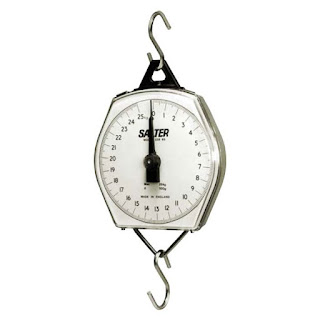
Analog Display: The analog display is the more traditional option. It uses a pointer to indicate the weight on a dial. Readability can suffer in low-light conditions, however, it can be helpful to have a physical pointer to gauge the weight.
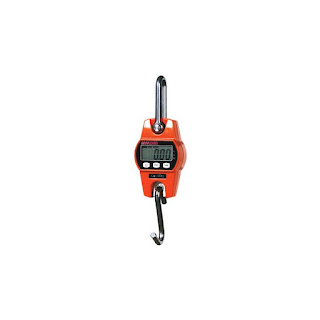
Digital Display: The digital display is the more modern option. It uses numbers to indicate the weight on an LCD screen. This type of display is much easier to read in low-light conditions and can provide more accurate readings. The important feature of a digital display is the hold function which helps to lock the weight for some time so that you can note it down.
Connectivity & Ease of Use:
Some crane scales come with Bluetooth or WiFi connectivity. This allows you to connect the scale to a smartphone or computer for easy reading and recording of weights. This is a great feature to have if you need to keep track of multiple weights over time. The certain task also demands printing a receipt which can be done via Bluetooth or WiFi connection.
Another important consideration is how easy the scale is to use. It should be easy to set up and calibrate. The scale should also be easy to read and operate. Choose a scale with large buttons or a touchscreen display for ease of use.
Size, Portability & Stability:
The size of the crane scale is also an important consideration. Some models are designed for smaller loads, while others can accommodate larger weights. Choose a scale that is the appropriate size for the weights you will be measuring. If you plan on using the scale in multiple locations, portability is an important consideration.
Look for a scale that is compact and lightweight for easy transport. Many scales come with carrying cases to protect them during transport. Stability is important for any scale, but it is especially important for crane scales. These scales are designed to hold heavy weights, so they need to be very sturdy. Look for a scale with a wide base and nonslip feet for added stability.
Different Types of Crane Scales:
Hanging crane scales are the most common type of crane scale. These scales hang from a crane or other overhead structure and use a hook to support the weight. Hanging crane scales are very accurate and can accommodate large weights.
Portable crane scales are another option. These scales are designed to be used on the ground or on a flat surface. They often come with wheels for easy transport. Portable crane scales are less accurate than hanging scales but can be more convenient for smaller loads.
Overhead crane scales are designed for use with overhead cranes. They have a special hook that attaches to the crane for support. Overhead crane scales are very accurate and can accommodate large weights.

Benefits of Using a Crane Scale:
• They help in the inventory management of raw materials as well as the products manufactured.
• It can help in the orderly stocking of items by highlighting the stacking order which needs to be followed.
• In case of any damage to the product, the weight measurements can help in assessing the insurance claim.
• This scale can also help in the detection of any structural damage to the crane itself.
• It is also a great tool for quality control as it can help in detecting any variation in the weight of the raw materials or products.
• Crane scales can also be used for marketing purposes. For example, if a company is launching a new product, the company can use the crane scale to weigh the product and create a marketing campaign around it.
• It can also be used for research purposes. For example, if a company is conducting a market survey, it can use the crane scale to weigh the products being surveyed.
There are many other uses of crane scales in businesses and industries. These are just some of the most common uses. Crane scales can be a valuable tool for any business or industry.
When choosing a crane scale, it is important to consider your needs and applications. There are many different types of crane scales available, so make sure to choose the one that is best suited for your needs. Consider the size, portability, and stability of the scale, as well as the features you need. With a little research, you can find the perfect crane scale for your business or industry.
Final Thoughts:
A crane scale is an essential tool for any business that needs to weigh objects accurately. It's important to choose the right crane scale for your needs. So professional team at Able Scale can help you find the perfect model for your business. We've outlined key features to look for in a crane scale, as well as the working process of how they operate. We also provide a few different types of crane scales so you can find the best option for your unique situation. Crane or weighing scales offer many benefits, such as accuracy and precision, which is why they are a popular choice for businesses all over Australia. If you're looking for a reliable and accurate way to weigh objects, consider investing in a crane scale from Able Scales.
A Guide to Buying Hanging Scales and Crane Scales

Hanging scales are important scales that are used to weigh objects that are not easily placed on a flat surface. They can be used to weigh people, livestock, feed, produce, and other objects. The main purpose of using these scales is to get an accurate weight measurement. It is used in medical, commerce, and many other industrial applications.
Crane scales are a type of hanging scale that is used to weigh heavy objects. They are commonly used in industrial and commercial applications. These scales are very accurate and can measure large weights. They are often used to weigh vehicles, machinery, and other large objects.
Hanging scales can be either digital or analog. Analog hanging scales have a dial that displays the weight, while digital hanging scales have a digital display. There are also different types of crane scales, such as floor scales and cargo scales. Floor scales are designed to weigh heavy objects that are placed on the floor, while cargo scales are designed to weigh objects that are suspended from a crane.
Top Benefits:
- Versatile: Can be used for a variety of applications
- Precise: Measurement accuracy to within 1/2 oz.
- Durable: Made with high-quality components for long-lasting use
- Portable: Weighs only 10 lbs. and is easily transported
Different Between Hanging and Crane Scales:
The duty of these scales offers different features for different purposes. Hanging scales are best used for weighing smaller objects whereas crane scales are designed for heavy-duty use and can weigh much larger items.
Another different thing is that crane scales have a remote display that can be used to show the weight from a distance, whereas most hanging scales do not have this feature.
Factors you should consider before buying either type of scale
When choosing a hanging or crane scale, you need to consider the following factors:
1. Capacity: The capacity is the maximum weight that the scale can handle. Make sure to choose a scale with a capacity that meets your needs. maximum capacity starts from 50 kg to 5000 kg. The item weight that you need to weigh will help you determine the capacity that you need.
2. Accuracy: The accuracy is the margin of error for the weight measurement. Choose a scale with the highest accuracy that you can afford. Hanging scales can have an accuracy of +/- 0.5% to +/- 2%, while crane scales can have an accuracy of +/- 0.1% to +/- 1%.
3. Readability: Readability is the smallest increment that the scale can measure. Higher readability means that the scale is more precise. Hanging scales typically have readability of 0.1 kg to 1 kg, while crane scales have readability of 0.01 kg to 0.1 kg.
4. Resolution: Resolution is the smallest change in weight that the scale can detect. Higher resolution means that the scale is more sensitive. Hanging scales typically have a resolution of 0.1 kg to 1 kg, while crane scales have a resolution of 0.01 kg to 0.1 kg.
5. Safety: Safety is an important consideration when choosing a scale. Make sure that the scale you choose has safety features such as overload protection.
How to use the hanging scale and crane scale?
In commercial and industrial applications, crane scales are used to weigh heavy items or objects such as vehicles, machinery, and containers. The process to use it is very similar to the hanging scale.
In the medical industry, hanging scales are used to weigh patients, and they are also used in food service to weigh produce and other food items. Hanging scales can be used in many different ways, but they all have one common goal: to provide an accurate weight measurement. There are a few things to keep in mind when using a hanging scale:
1. Make sure that the scale is level. This will ensure that the weight measurement is accurate.
2. Make sure that the object you are weighing is centered on the scale. This will also help to ensure accuracy.
3. Make sure that you are using the correct units of measurement. Most scales will measure in either pounds or kilograms.
4. Make sure that the scale is calibrated properly. This can usually be done by following the instructions in the user manual.
5. Make sure that you are not overloading the scale. This could damage the scale or cause an inaccurate reading.
Conclusion:
Both hanging and crane scales have their benefits and drawbacks. It is important to consider what you will be using the scale for before making a purchase. If you are still unsure which type of scale would be best for your needs, you can visit an online weighing store to get product information with the different prices. At Able Scale, you can find the different varieties of scales for weighing in Australia.